[image]
[title]Every year, Time Out names its ‘top underrated destinations in Europe’ for the year ahead. We called it on a number of places that ended up being the Euro destination of their summer – the likes of Albania, Marseille and Montenegro – and this year, we’re highlighting Bulgaria, specifically its magical second city, Plovdiv.
Plovdiv has long been an if-you-know-you-know kind of city, a quiet blend of old and new, which frequently gets overshadowed by the country’s capital Sofia, as well as the many well-trodden hotspots in neighbouring countries. But with a brand-new music festival, PhilGood happening this summer (ft. The Cure, Gorillaz and more), we reckon there’s about to be a load more eyes on this cultural hotspot. So what’s it like in our favourite underrated destination right now? Here’s our writer John Bills’ account – and why you should add it to your travel list for 2026.
➡️ READ MORE: Our full list of the most underrated places in Europe
Get you a city that can do both. Are we still doing that? Well, trends come and go, but Plovdiv is eternal. In fact, it might outlast eternity, although that might be taking things a little too far.
Still, Bulgaria’s second city is one of the oldest on the planet, the oldest continually inhabited city in Europe, yet somehow Plovdiv remains ahead of the curve. Yes, it has been around for millennia, but Plovdiv is also Bulgaria’s most exciting, creative city, a place with an unrivalled cafe culture, a joyous energy, and some of the best views in the region. Being built on seven hills certainly helps – and you’re never far from a sweeping vista in the city on the Maritsa.
Go back in time
If history is your thing, Plovdiv is your new favourite city. No matter whether you are curious about Thracian, Roman, Byzantine, Ottoman, 20th-century socialist, modern-day European, or the Bulgarian thread that runs through it all, you’re going to be surrounded by whispers, stories, and landmarks. History runs long here, stretching back more than 6,000 continuously inhabited years, and the city has been rebranded time and again. Whether the Thracians, Romans, and others consider it rebranding is another question for another day, but this settlement has been known as everything from Kendrissos to Filibe, via Philippoplis, Trimontsium, Plapdiv, and more.
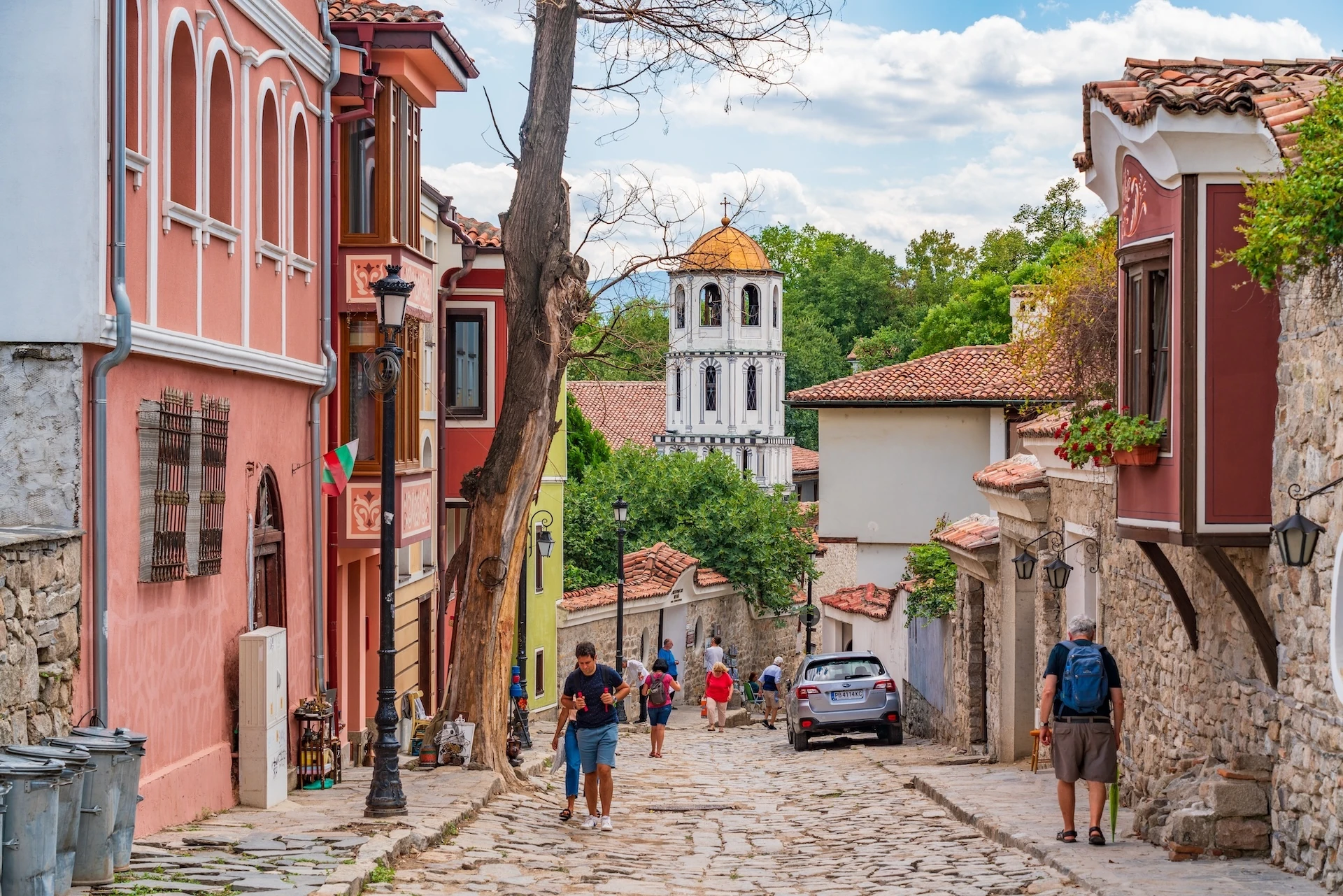
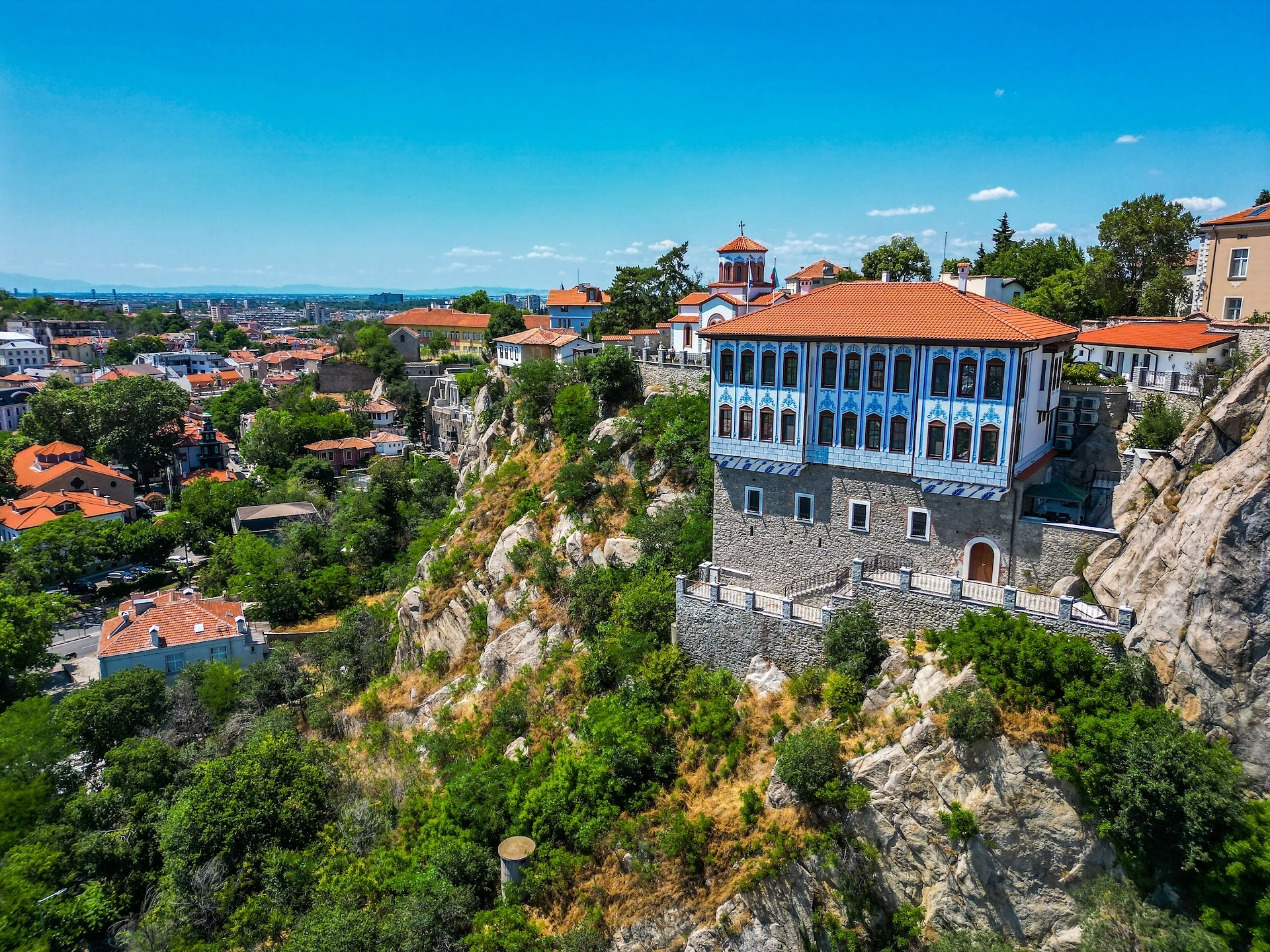
Trying to embrace Plovdiv’s history as a visitor is a must, but don’t worry about finding a chronological thread. Start in the Old Town, one of the finest in the Balkans, a warren of cobbled streets that weave in and out of three hills. The many civilisations that have dominated here have left their mark, from the remains of Thracian settlements on Nebet Tepe to the impressive examples of 19th-century Revival architecture. The latter is Plovdiv at its most alluring, where sumptuous structures hang over corners with grace and sophistication. Many have become museums and galleries (there is usually a nominal entrance fee), and you could easily spend a day just dipping in one after another. Everyone has their favourites, but the Kuyumdzhioglu House is hard to ignore.
Music and culture
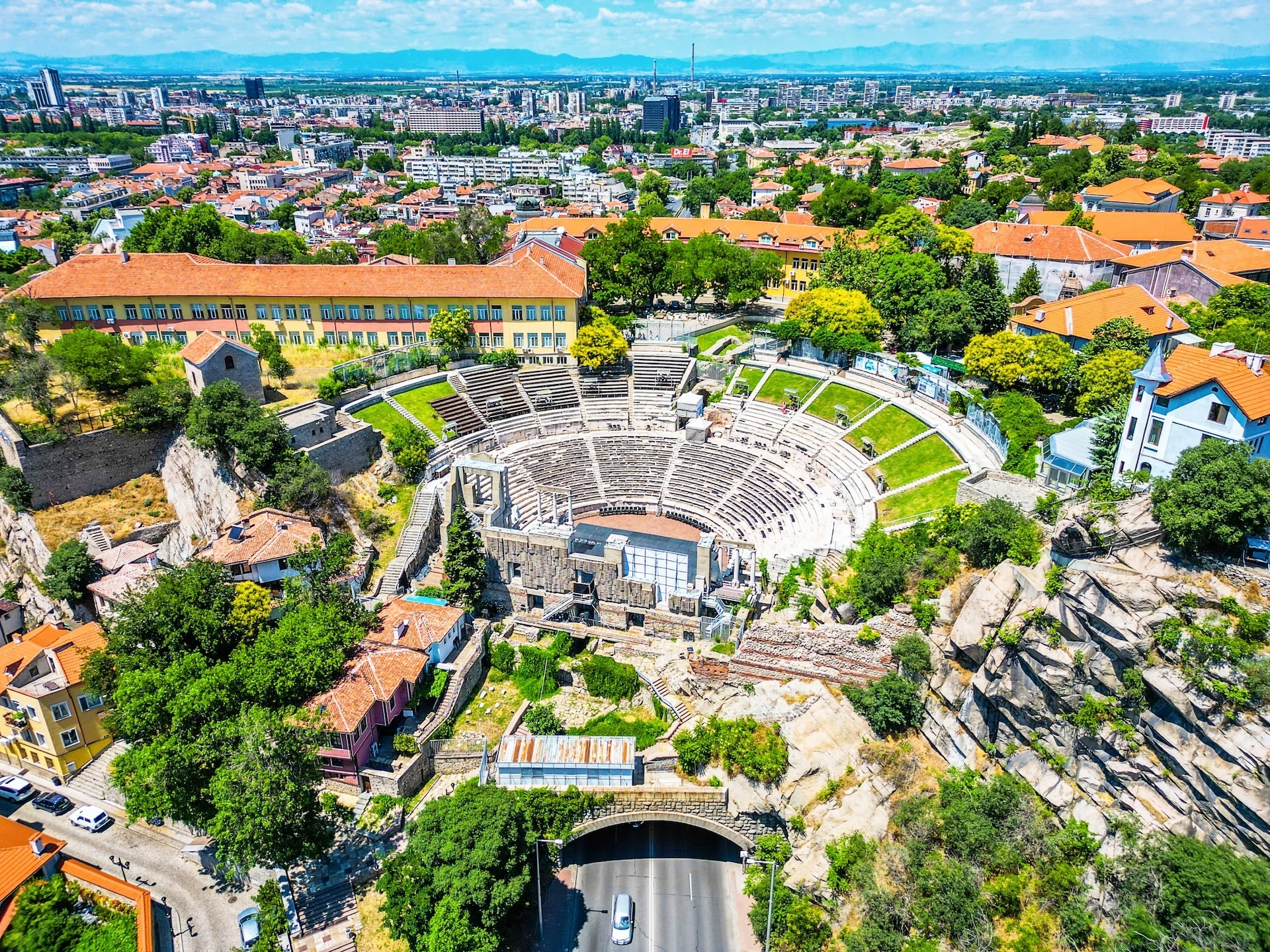
The Revival houses are Plovdiv at its most charming, but the main event in these parts is the stunning Philippopolis Roman Theatre, one of the best-preserved of its kind on the planet. There are questions about the exact date of construction (most agree it was built sometime during the first two centuries of the Common Era), but the place’s atmosphere and aura are undeniable. If you are in town for a concert here, you are in for a real treat. Even without live entertainment, Plovdiv’s Roman Theatre is a spectacular landmark.
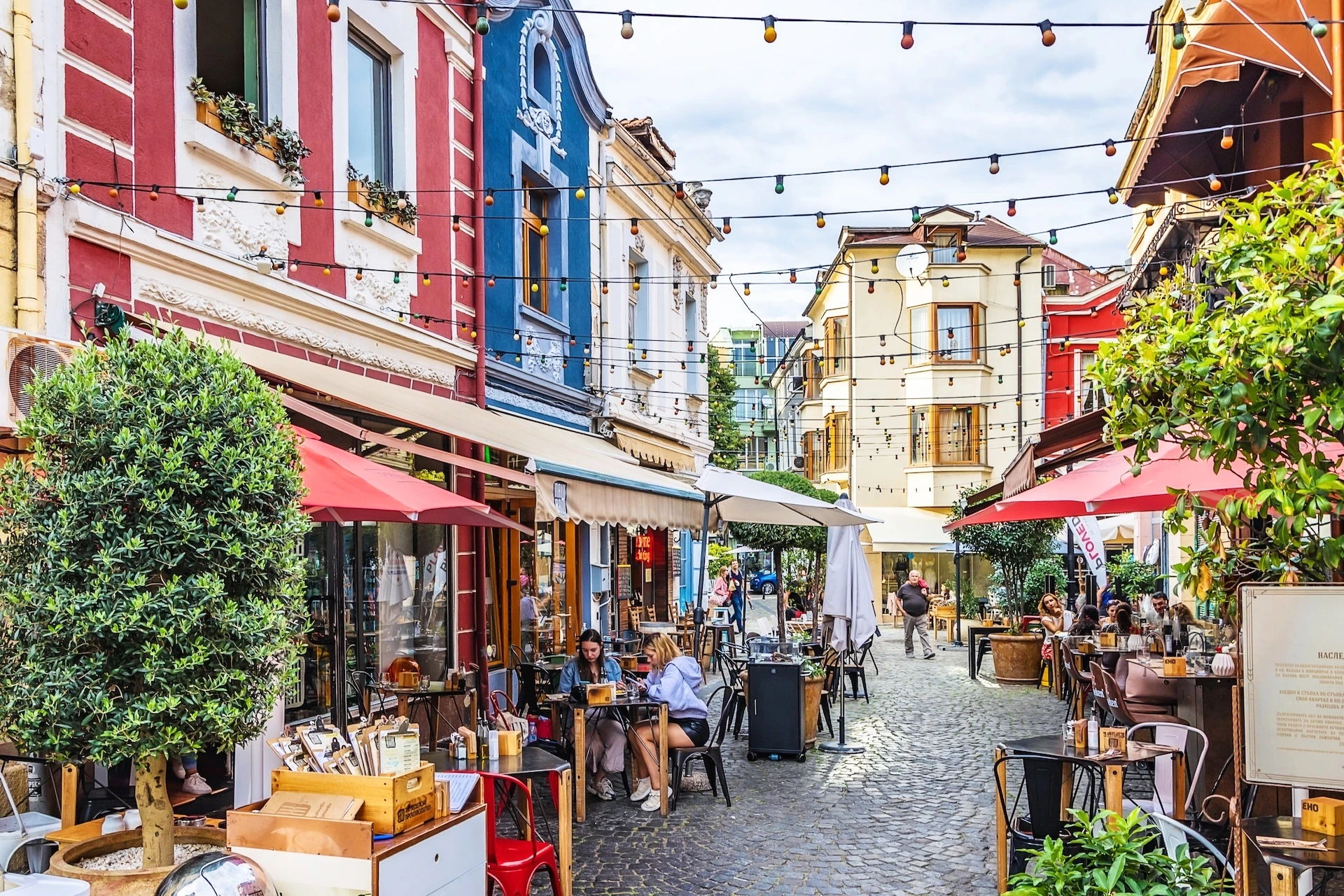
Kapana is Plovdiv’s creative district, the first dedicated creative district in the country, no less, a former hotbed of artisans, blacksmiths, goldsmiths, and more that has been developed into a conveyor belt of craft beer bars, galleries, indie shops, restaurants, and hotels. Aylyakria gets hearty plaudits on the restaurant scene for good reason: a creative eatery that treats food as a sensory experience. It doubles up as a fabulous spot to sample a Bulgarian wine or three (or four). There are plenty of food and drink options in Kapana, covering everything from traditional Bulgarian to international cuisines and beyond. Sit down, get a shopska salad, fill up on kavarma (a slow-cooked stew), and savour every sip of the wine.
Plovdiv also doubles up as a fabulous base for getting out into the underrated charms of southern Bulgaria. The UNESCO-approved 11th-century Bachkovo Monastery lies just 18 miles south of town, a vital complex that has seen significant turmoil over the centuries but remains a hugely important site in Bulgaria’s spiritual landscape. Asenovgrad sits between Plovdiv and the monastery, and while the town itself is well worth a look, most head here to see the spectacular fortress on the edge of town. The view of the Church of the Holy Mother of God is one of the finest in the country.
Plovdiv expertly straddles the divide between antiquity and modernity, offering the best of Bulgaria through a unique blend of quaint streets and sophisticated confidence. It ticks all the boxes.
Discover more great places to visit in Europe
🏙️ The best city breaks in Europe
💸 The cheapest cities in Europe
🏖️ The best beaches in Europe
🏨 The best hotels in Europe
📌 Our ultimate guide to Europe